Our Computers, Our Selves.
A Gen X perspective on our rapid cyborgian transformation and youthful digital ennui.

Nov 2025 | New York City
“I cannot make you understand. I cannot make anyone understand what is happening inside me. I cannot even explain it to myself.”
― Franz Kafka, The Metamorphosis

“Denmark is introducing a new bill that aims to protect citizens from deepfakes by giving them copyright over their own likeness.”1 This includes face, body, and voice.
This is a great and important idea, but it also illustrates the strange world we are rapidly heading toward, with two distinct but related “selves”: digital-you and IRL (“in real life”)-you. This is already well underway, of course.
It used to be that IRL-you was the default prime mover with the greatest agency, but we have arguably shifted into a reality where digital-you has a greater impact on your life than IRL-you.
Your digital self is now the default, with your IRL self a secondary actor, though one hugely impacted by the goings-on of digital-you.
10-15 years ago, when advising clients on the difference in approach to marketing and communications strategy across age groups, I would say, “If they’re over 50, they start IRL and then go online. If they’re under 50, they start online and then go IRL.” But we have all now been nudged into a world where our lives are largely managed through a screen.
Click the button below to support my work with no paid subscription required.
Any amount you choose, securely through Stripe.
Thank you so much!
Unless you are very elderly or have made a Waldenesque decision to move “off the grid”, you’re navigating life through ones and zeros. More of your relationships and activities likely take place through a screen than otherwise — and the younger you are, the more this is likely to be true.
This means our cultivated digital actions and representative identity, much of which can be manufactured, manipulated, hidden, and distorted, now arguably carry considerably more weight than our actual physical actions and identity.
Digital activities can have profound real-world consequences. The random person you are matched with on a dating app could be the love of your life or a serial killer. They might turn your first date into content and ridicule you or cast you as a villain. They might use you for sex and then ghost you, vanishing back into the internet without any explanation. The glorified video games that are RobinHood and Coinbase made some young men wealthy beyond their wildest dreams, but also caused suicides from ill-thought-out, over-leveraged speculations made based on the blatherings of an anonymous “ape” on Reddit.
Now, more than ever, we are living in a collective fiction, where reality, truth, facts, and history are malleable, unreliable, and lacking a collective consensus. Nothing is real — except the outcomes and their impacts.
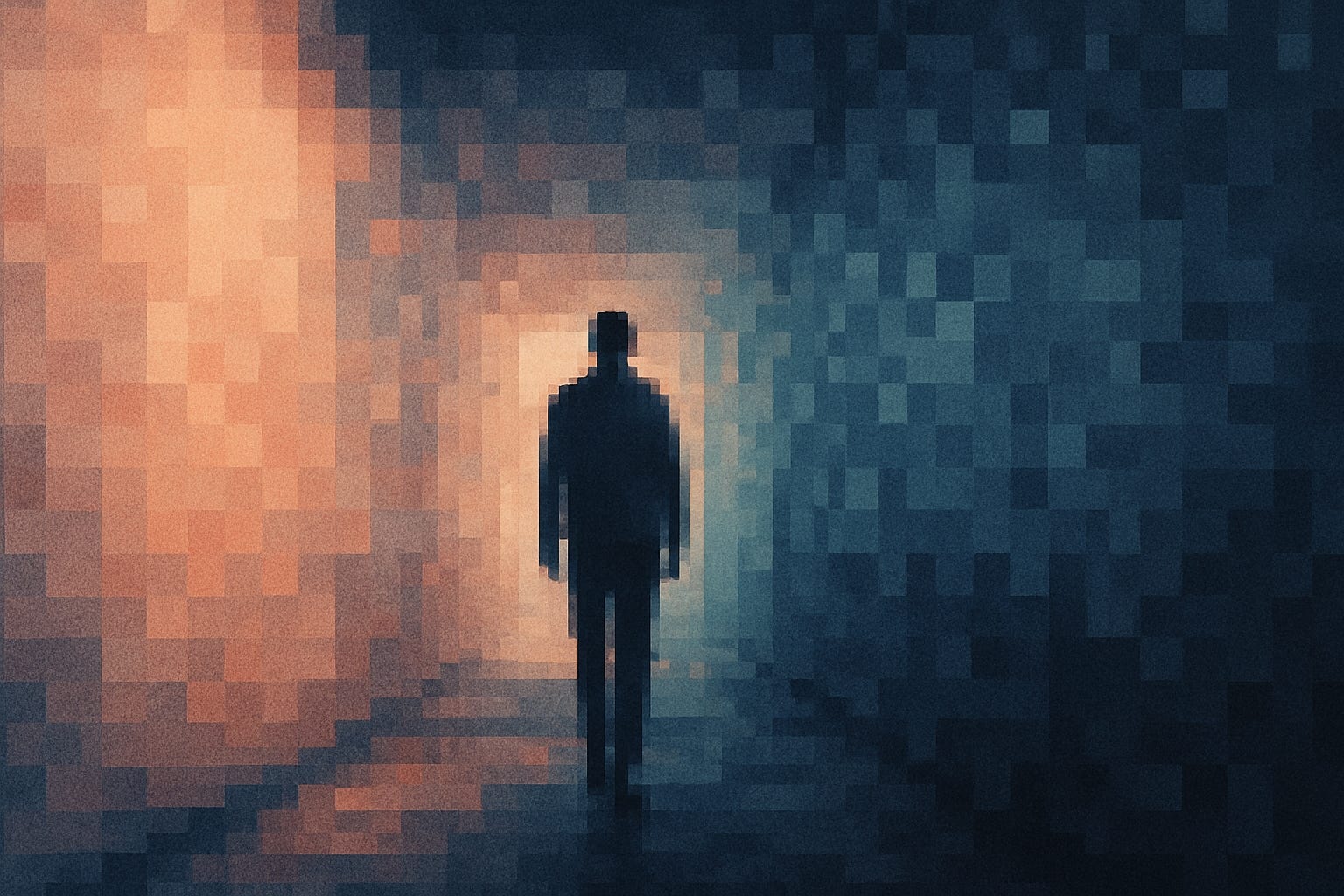
I sometimes wonder if anything was ever real. Churchill said, “History is written by the victors.” Maybe it doesn’t matter if things are real or not, only that the populace believes them to be so. That foundation, a universal understanding of what is true and reliable, is the basis for so-called civil society. It’s also a thing of the past.
Now, for the first time since the introduction of social media, across all age groups, we are seeing a decline in posting. Anecdotally, one sees a lot of backlash against the constructed digital world in which we all now exist. We hear about “the dead internet theory”, which posits that the majority of digital communications are now bots talking to other bots. Corporations and governments keeping us busy — and themselves rich and powerful — through overt manipulation. Maybe my tin-foil hat is on too tight, but that doesn’t sound all that far-fetched to me.
Putting yourself out there online isn’t something to do lightly anymore. It’s not just a fun way to express yourself free of negative consequences. On the contrary, it can render you jobless, shame you into oblivion, or even get you killed. We are not as naive as we once were, where we freely shared our personal data, opinions, and photos of our children on these channels with full confidence that it didn’t really matter. Some found out the hard way.
On the face of it, young people posting less might sound like a good thing. One might assume they are instead painting watercolours, falling in love, or “touching grass” in internet-lingo. But they aren’t.
They may be posting less, but there is no sign they are scrolling less. They are perhaps starting to think of the internet the way Gen X did about TV — as a passive, one-way broadcast. The corporations have won, and there is less space for the innocent and creative sharing of ourselves.
By the time Gen X came along, TV had already become a self-parody. It was largely corporate-controlled, idiotic, meaningless drivel designed to distract and kill time. But Gen X was hip to this and wasn’t buying it. Unsupervised and eating sugary cereal, we watched endless hours of television, of course, but we did so through our cynical, irony-drenched eyes. We were the first in what is now a long line of generations to understand that the dream our Boomer parents believed in and hoped for was not going to happen. We were born into the beginning of the end of the North American promise of a life better than our parents.
When Boomers watched TV, they watched programs designed by Boomers for Boomers, with the Boomer worldview, belief systems, and perspectives baked in. Gen X watched TV with the understanding that, like things in general, it really wasn’t about us or for us, which resulted in a way of seeing the world as jaded outsiders with no recourse but to shrug our collective shoulders, light cigarettes we knew full well would kill us, pick up a guitar or a joint (or, ideally, both) and say “whatever, man.” Rome was burning. Fuck it.
I don’t have a crystal ball, but it feels like the end of something — a way of living, even — and, with the conflicting combo of the potential pushback on social media and the impact of AI, which stands to grow exponentially in short order, I think we are heading into uncharted waters. There be dragons.
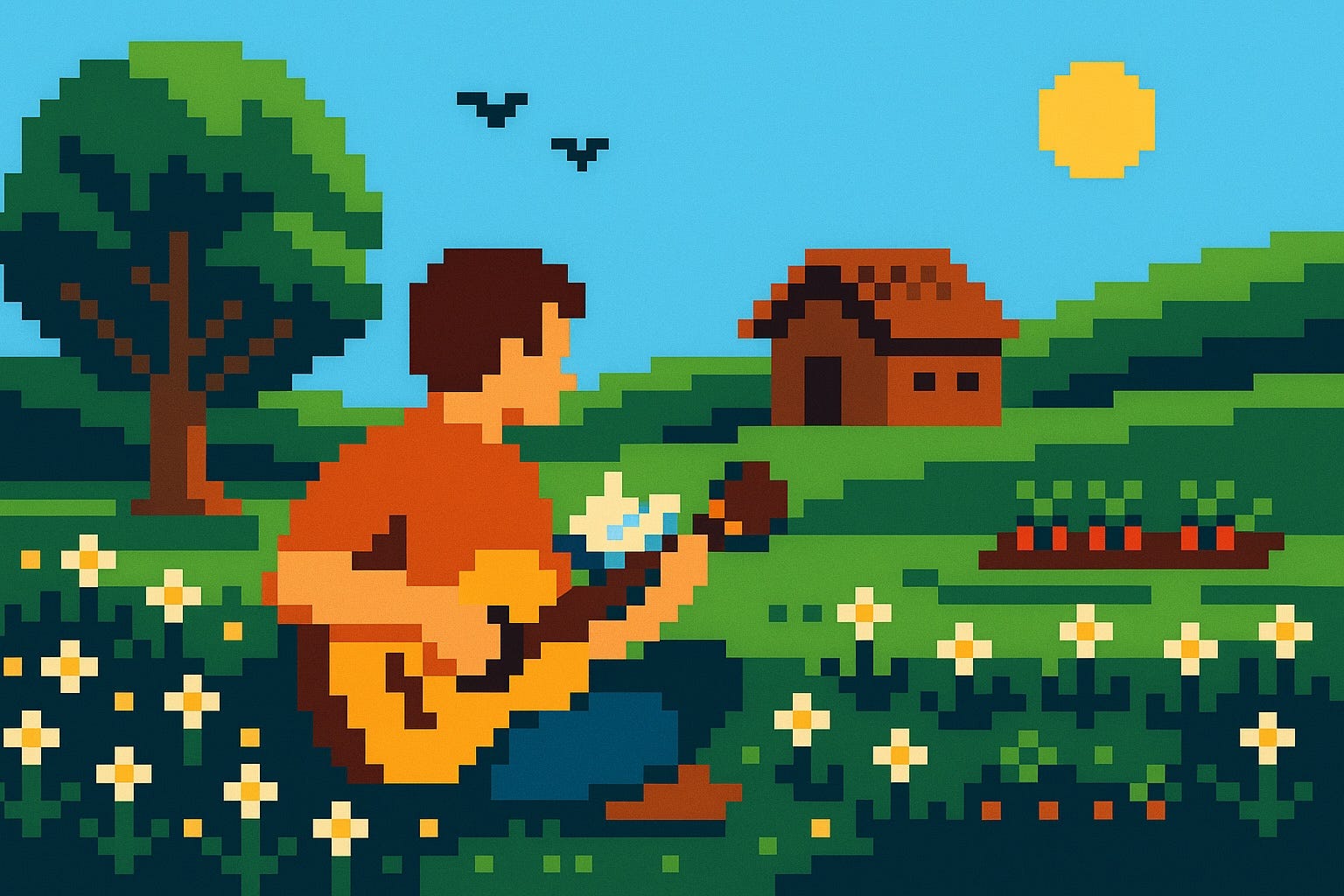
Like many, I often fantasize about chucking it all in and retreating to the middle of nowhere, surrounded by wildflowers, chirping birds, and a little vegetable garden. I’d spend my days reading, going for long walks, playing guitar, and meditating. But even in this fantasy, I have high-speed internet access. Regardless, I can’t afford to drop out of society. Like most people, capitalism has me by the balls.
Will there be a continued backlash against the digital world? Or will AI improve our lives such that we all are happy to embrace the idea of a cyborgian existence? Is the trend of young people losing interest in posting on social media a sign of hope for humanity, an acceptance that these channels are now corporate megaphones and a resulting digital nihilism, or a doomed Luddite response to the inevitable? I don’t know.
The only thing that seems certain is that things are likely going to get weirder and more unsettled. Because we are no longer just users of the machines. We are living inside them.
(Opinions are my own. I use em-dashes, but this wasn’t written by AI.)
Click the button below to support my work with no paid subscription required.
Any amount you choose, securely through Stripe.
Thank you so much!
ICYMI
In case you missed it, here’s my last post, where you can discover what the following subjects have to do with 18 years of sobriety:
Major household appliances
The 80s classic video game Galaga
Batman and Robin actor Burt Ward’s penis
Sisyphus
My full frontal nudity in a room full of strangers
George Burns
Metaphorical gardening
Sufi poets
https://www.npr.org/2025/07/27/nx-s1-5478623/denmark-introduces-legislation-to-protect-its-citizens-from-ai-deepfakes